Наши конференции
В данной секции Вы можете ознакомиться с материалами наших конференций
II МНПК "Спецпроект: анализ научных исследований"
II МНПК"Альянск наук: ученый ученому"
I Всеукраинская НПК"Образовательный процесс: взгляд изнутри"
II НПК"Социально-экономические реформы в контексте европейского выбора Украины"
III МНПК "Наука в информационном пространстве"
III МНПК "Спецпроект: анализ научных исследований"
I МНПК "Качество экономического развития"
III МНПК "Альянс наук: ученый- ученому"
IV МНПК "Социально-экономические реформы в контексте интеграционного выбора Украины"
I МНПК "Проблемы формирования новой экономики ХХI века"
IV МНПК "Наука в информационном пространстве"
II МНПК "Проблемы формирования новой экономики ХХI века"
I НПК "Язык и межкультурная коммуникация"
V МНПК "Наука в информационном пространстве"
II МНПК "Качество экономического развития"
IV МНПК "Спецпроект: анализ научных исследований"
ІІІ НПК "Образовательный процесс: взгляд изнутри"
VI МНПК "Социально-экономические реформы в контексте интеграционного выбора Украины"
МНПК «Проблемы формирования новой экономики ХХI века»
IV МНПК "Образовательный процесс: взгляд изнутри"
IV МНПК "Современные проблемы инновационного развития государства"
VI МНПК «Наука в информационном пространстве»
IV МНПК "Проблемы формирования новой экономики ХХI века"
II МНПК студентов, аспирантов и молодых ученых "ДЕНЬ НАУКИ"
VII МНРК "Социально-экономические реформы в контексте интеграционного выбора Украины"
VI МНПК "Спецпроект: анализ научных исследований"
VII МНПК "Наука в информационном пространстве"
II МНК "Теоретические и прикладные вопросы филологии"
VII МНПК "АЛЬЯНС НАУК: ученый - ученому"
IV МНПК "КАЧЕСТВО ЭКОНОМИЧЕСКОГО РАЗВИТИЯ: глобальные и локальные аспекты"
I МНПК «Финансовый механизм решения глобальных проблем: предотвращение экономических кризисов»
I Международная научно-практическая Интернет-конференция «Актуальные вопросы повышения конкурентоспособности государства, бизнеса и образования в современных экономических условиях»(Полтава, 14?15 февраля 2013г.)
I Международная научно-практическая конференция «Лингвокогнитология и языковые структуры» (Днепропетровск, 14-15 февраля 2013г.)
Региональная научно-методическая конференция для студентов, аспирантов, молодых учёных «Язык и мир: современные тенденции преподавания иностранных языков в высшей школе» (Днепродзержинск, 20-21 февраля 2013г.)
IV Международная научно-практическая конференция молодых ученых и студентов «Стратегия экономического развития стран в условиях глобализации» (Днепропетровск, 15-16 марта 2013г.)
VIII Международная научно-практическая Интернет-конференция «Альянс наук: ученый – ученому» (28–29 марта 2013г.)
Региональная студенческая научно-практическая конференция «Актуальные исследования в сфере социально-экономических, технических и естественных наук и новейших технологий» (Днепропетровск, 4?5 апреля 2013г.)
V Международная научно-практическая конференция «Проблемы и пути совершенствования экономического механизма предпринимательской деятельности» (Желтые Воды, 4?5 апреля 2013г.)
Всеукраинская научно-практическая конференция «Научно-методические подходы к преподаванию управленческих дисциплин в контексте требований рынка труда» (Днепропетровск, 11-12 апреля 2013г.)
VІ Всеукраинская научно-методическая конференция «Восточные славяне: история, язык, культура, перевод» (Днепродзержинск, 17-18 апреля 2013г.)
VIII Международная научно-практическая Интернет-конференция «Спецпроект: анализ научных исследований» (30–31 мая 2013г.)
Всеукраинская научно-практическая конференция «Актуальные проблемы преподавания иностранных языков для профессионального общения» (Днепропетровск, 7–8 июня 2013г.)
V Международная научно-практическая Интернет-конференция «Качество экономического развития: глобальные и локальные аспекты» (17–18 июня 2013г.)
IX Международная научно-практическая конференция «Наука в информационном пространстве» (10–11 октября 2013г.)
Krasnova A.I., Tsarenko I.O.
Ukraine
FORMATION AND PROSPECTS OF PENSION SYSTEM IN UKRAINE
At the modern stage of the development of Ukraine the necessity of reforming pension system is caused by a number of factors, such as : economic, demographic, social. Nowadays this problem is especially actual in many countries of the world, and Ukraine in particular, irrespective of the level of economic development and complicated economic situation.
Since 2004, a new pension system of Ukraine provides three levels. The first is solidary system of obligatory state pension insurance. This system is based on the principles of solidarity and subsidizing, that is payments of pensions and granting of social services are carried out at the expense of State means. The second level is cumulative system of obligatory state pension insurance. This principle is based on accumulation of taxes of the insured persons in Comulative fund. Payments from Comulative fund will be carried out in addition to obligatory pension payments. The third level is system of not state provision of pensions. This system is based on principles of voluntary participation of citizens, employers and their associations in formation of pension accumulation for reception by citizens of additional pension payments at the expense of deductions on not state provision of pensions and the investment income added on pension assets.
Comparing all factors it is necessary to point out that demographic factor is of great importance nowadays in Ukraine . Society is threatened by the demographic level of life ( LDL ) or in other words there is the tendency of changes in dynamics of pensioners per one employee. It can be observed in the following figure :
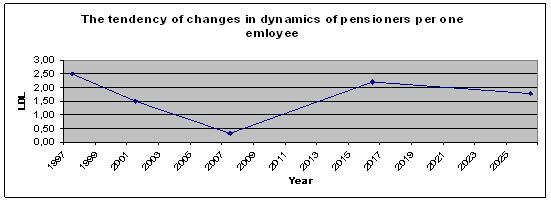
Figure 1. The tendency of changes in dynamics of pensioners per one employee during 1997 – 2026 years.
The basic theoretical principles of reforms are stated in works of foreign scientists and experts, such as R.Agun , E.Endrjus , R.Rofman , M.Rutkovskiy , E.Fultu and others.
Moreover t he executive and legislative branches of power electing and forming a new model of the pension system preliminarily have analyzed accumulated world experience of other countries and as the result followed eventually Russian-polish model of the pension system ( Look Table 1).
Table 1 STRATEGIES AND MODELS IN PENSION INSURANCE
|
STRATEGY |
Model |
Level Of pension system |
||
|
1 |
2 |
3 |
||
|
united |
Soviet |
state pension ( united ) |
- |
- |
|
united - comulative |
Russian-polish |
state pension |
The compulsory insurance |
accumulated ( laboring , personal ) |
|
comulative -united |
American |
state pension ( united ) |
working ( laboring ) |
accumulated ( personal ) |
|
German |
state pension ( united ) |
working ( laboring ) |
accumulated ( personal ) |
|
|
conditionally- comulative |
Japan |
basic pension |
Additional sate and laboring |
- |
|
comulative |
Chilies |
compulsory accumulated pension |
The compulsory insurance (3%) |
- |
|
Kazakhstan |
compulsory accumulated pension in state pension fund |
Voluntary accumulated pension |
- |
|
We should mention that positive aspect of a new model of Ukrainian pension insurance will be the right to inherit pension insurance.
The model should consider risk factors connected with changes in a demographic situation (which is close to sensitive solidary system) and with fluctuations in economy and in the market of capitals (that is more like cumulative system).
The existing Ukrainian pension system still maintains many features of the former Soviet system and has some essential disadvantages that make its effective functioning under present conditions impossible. The conservation of this system will lead to series of negative consequences, including: deterioration of the living standards of pensioners; the necessity of a further increase in social security taxes, and, as a result, the growth of expenses for the labor force, reduction of the labor market, and an increase of the informal sector in the economy; to increase budget expenses for the pension system, and, as a result, an increase of the budget deficit, and a reduction of budget expenditures in other spheres such as health care, science, and education, which will lead to a deceleration of economic growth; the aggravation of the generations conflict.
Thus, there is a necessity to undertake pension reform in Ukraine . The introduction of insurance principles to the system would solve, at least partially, the abovementioned problems.
